EPISODE TRANSCRIPTS
PART 4: THE DEVIL to THE WORLD
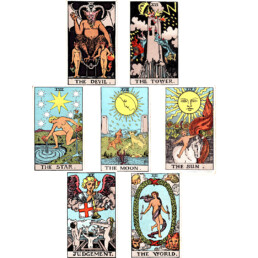
Tarot Exegesis • Part 4: The Devil to The World
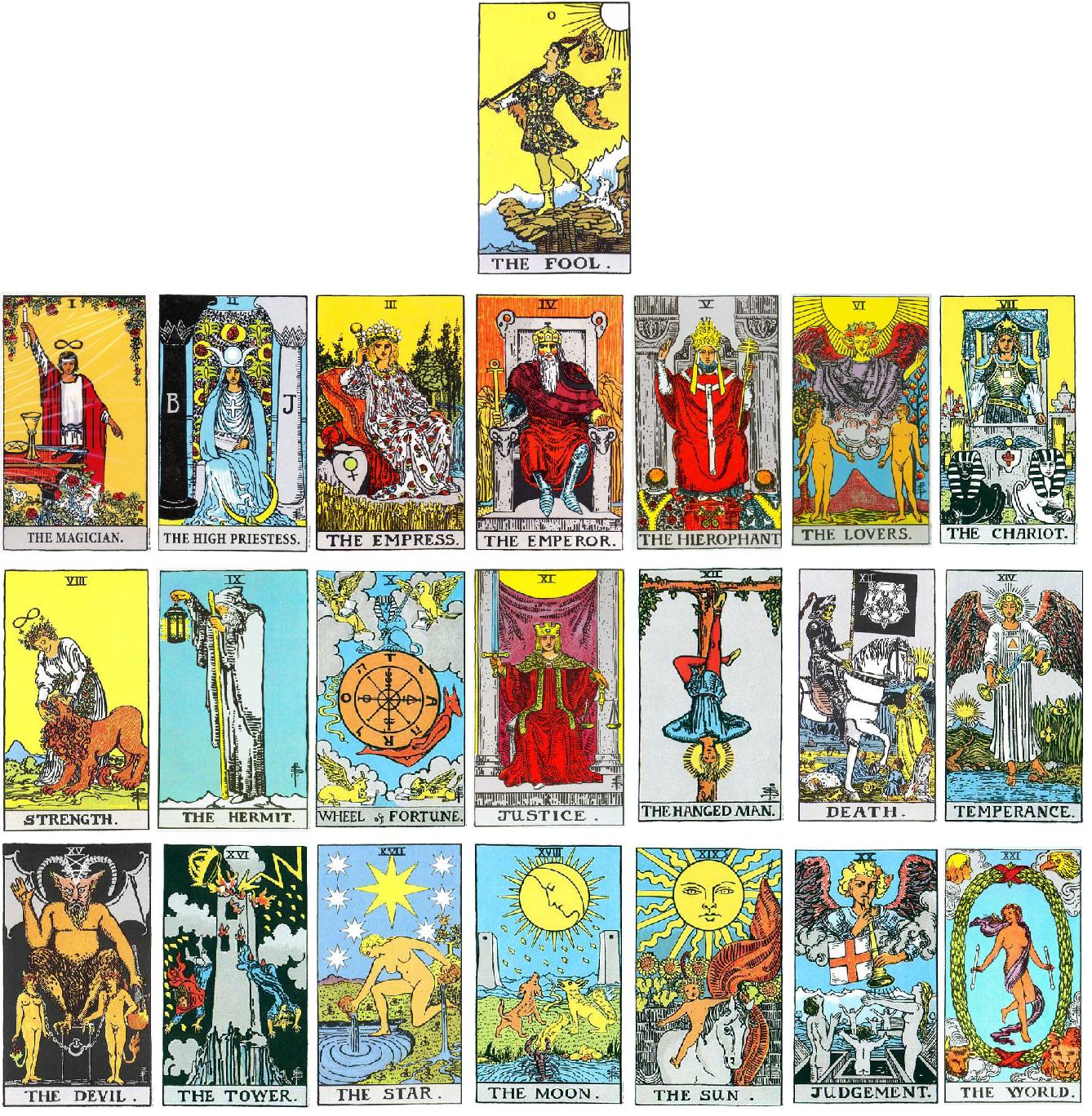
Welcome to the Tarot Exegesis series. I am your host, MJDorian. This is the fourth and final part of our journey, where we arrive at the last seven cards of the Major Arcana. Throughout our exploration we’ve been using a popular framework to understand the symbolism of the cards but also the story they tell. As you arrange the Major Arcana into three rows of seven cards each (with The Fool on the side) a framework is revealed for developing self awareness and spiritual awakening.
No small feat. But the cards and their potential to elicit transformations within you hold this power.
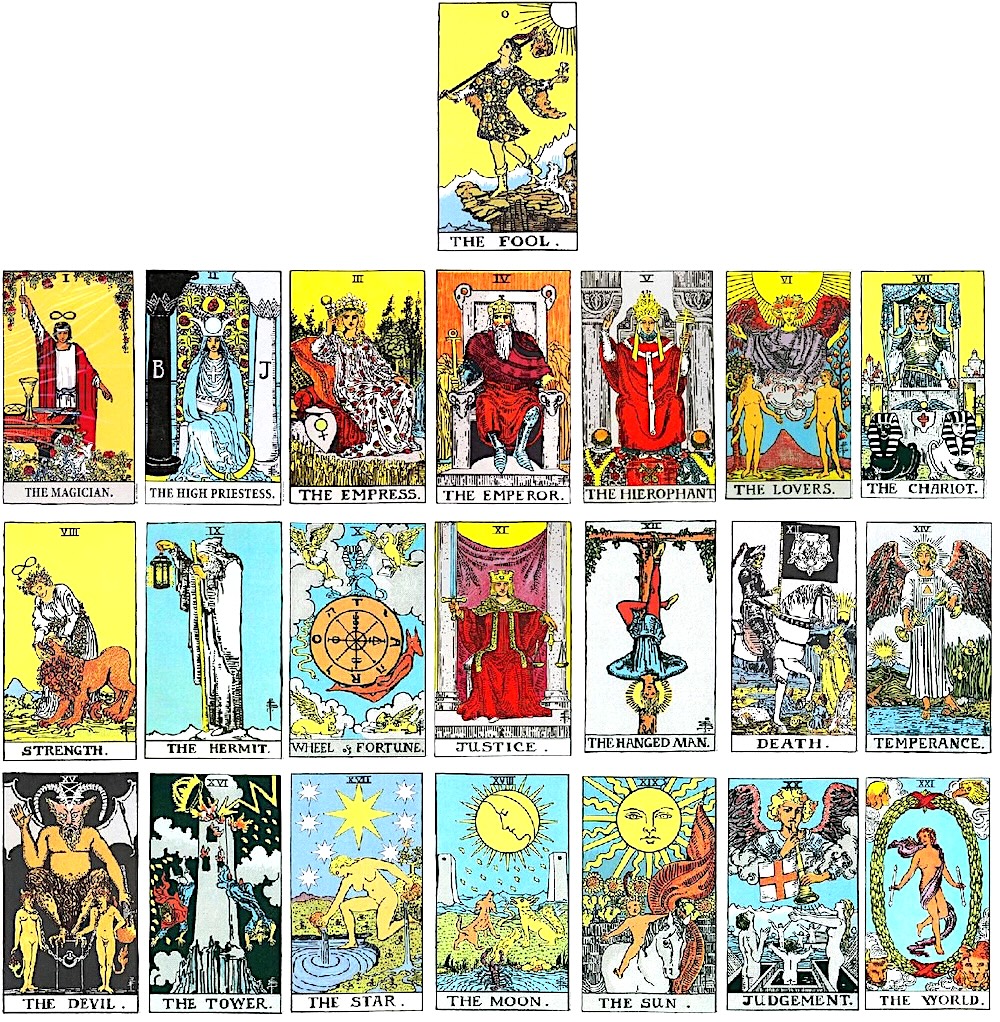
I highly recommend that while listening to this episode you lay your cards out in this structure. So that the symbols can speak to you with all their capacity. If you are in travel and don’t have them at hand, make a point of laying them out later to reflect on them. For now I have provided a link where you can see this layout on my website. The link is in the text accompanying this release.
Lay the Major Arcana out with these steps: place The Fool on the side, next arrange three rows of seven cards each, with each row going from left to right. The first row begins with The Magician and ends with The Chariot, under that the second row begins with Strength and ends with Temperance, and finally the third row begins with The Devil and ends with The World. You can then place The Fool on the left side of these rows or directly above them, as The Fool represents you in your full eagerness and potential as a traveller on these paths. Esoterically, The Fool represents the purity of your soul entering its life journey on Earth.
On this episode we have finally arrived at the third row. The row dealing with spiritual awakening and the wellbeing of your soul. To review: the first row deals with your conscious mind and recognizing the shaping of your personality by the external environment—these are the cards from The Magician to The Chariot. The second row deals with the unconscious mind, and the gradual engagement with the depths of your personality, those aspects you hide from others, a process which takes great honesty, solitude and surrender—embodied by The Hermit and The Hanged Man. This row of cards starts on Strength and ends on Temperance.
The final row deals with spiritual awakening and the wellbeing of your soul. We have arrived at a rare step in the journey which will require even more presence of mind and thoughtfulness of spirit. But if you have been engaging with the work of self reflection required of the first two rows, then you are ready.
Each card of the Tarot is a gate, whose metal frame is built from the elementary power of several archetypes. As you pass through each card with honesty and pure intention you are engaging forces of transformation within you. This is not an intellectual exercise—this is praxis. The Tarot conceals an esoteric practice for developing self awareness and spiritual awakening.
The only question that remains is: are you ready?
If so, we continue on.
This is Tarot Exegesis Part 4: From The Devil to The World.
Let’s begin.
THE THREE ROW LAYOUT
CARD XV: THE DEVIL
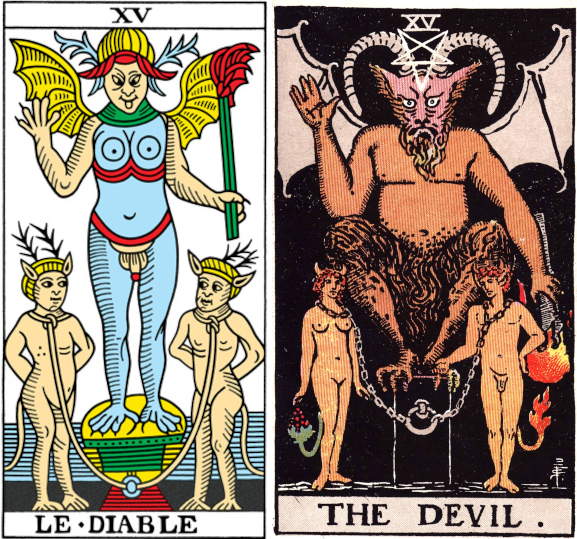
The Devil is a card of confrontation. Its symbolism hits you immediately—the figures are nude, chained to a block on which the devil is perched, represented as a horned beast with batlike wings. Its symbolism is striking but its various meanings are subtle. As usual with the Tarot, there is much more underneath the surface.
The Devil card is a confrontation with the bonds that chain you to matter—represented in the Waite-Smith deck by the black stone on which the devil perches, a rectangle which is the measurement of two squares aligned vertically. The square is an esoteric symbol for this physical plane.
The Devil card represents a confrontation with what you have most feared and you have most wanted to avoid. You may have climbed this far, passed through 14 gates of self awareness and growth and done the work of reflection. But you have strategically avoided addressing this one aspect of yourself. We all have such dark corners of our psyche; parts we hide from others and even from ourselves.
Dr. Carl Jung once wrote “That which you most need will be found where you least want to look.”
The Devil card is here to remind you to confront that which you fear, that which you have been running from. To accept it, understand it, integrate it in a way beneficial to the whole—and then you will overcome it. And it will no longer hold sway over you. You shall have no masters. Nothing can chain you if you have not given it permission.
But again, this does not mean you should be in a constant battle with forces inside of you. Instead, you want to reach a place of peaceful coexistence with them, a relationship rooted in understanding. And ideally, one which has integrated those nasty impulses into more positive avenues.
There is a further lesson in the position of The Devil card: it does not arrive in the first or second row, but in the third row, the one dealing with spirituality. Why?
The way I understand it, during any climb in spiritual and psychological growth, there comes a pivotal moment where The Devil—being your base animal impulses and desires—comes to tempt you back down the mountain. The Devil awaits at the gate of your true potential.
What does this mean?
When you are making substantial progress in your psychological and spiritual growth then you will encounter passing moments when your temptations are stronger than ever before. And many who have made progress in their self development, when they reach this point, fall back to their old ways.
This is the proving ground, a kind of guardian at the gate. This is demons tempting Buddha under the bodhi tree in the moments before he reaches nirvana. This is Satan tempting Jesus on the mountaintop with all the kingdom’s of the world. This is the turning point where addicts, having made all the hard won progress to do away with their old ways, fall back down the cliff. Because The Devil’s bargain is so tempting it is tailor made for your worst impulses—a bespoke temptation. I feel this has proven true in my own life experiences. Whenever I make steady progress in my spiritual development, there comes a scenario in my personal life which invites me to revert back from my celestial aims to the terrestrial plane—base desires and fast fulfillment.
Not everyone will recognize this moment, but especially those of us who have struggled with some slice of darkness inside us, you will know the truth of this passage. The Devil awaits at the gate of your true potential.
These lessons are coded into the ritualistic scene of the card. Notice the chains around the necks of the man and woman. Chains which aren’t especially tight. Notice how loosely they hang around the necks of the woman and man. They could simply lift those chains off and rid themselves of the demon’s influence at any time.
The Devil pictured is not the expected sabbatic goat or Baphomet we often associate with occult imagery. Look closely, you see it is a ram’s head, with a man’s arms and chest, extended bat wings, animal fur covered thighs, and most importantly birdlike feet. If it were based on the famous Baphoment image, the feet would be hooves. This implies both a creature of the land, via the horns, but also a creature of the air, via the bird feet and wings.
Air is associated with spiritual matters. This, to my mind, implies that this particularly pesky guardian is one able to reach the spiritual paths. And confirms our suspicions that The Devil card teaches us to not only watch out for but expect a counter-movement in our inner development when we are growing spiritually. One which is tied up with lust, animal impulses, and an empty pleasure oriented indulgence in matter.
Curiously, the man is offering his right hand to the woman. I think there is some truth to this as well, in that I think men are more susceptible for falling back into lust and indulgence in matter than women. Of course, it does happen for women too, but it is a particularly male oriented fall from grace. Those biological drives may be stronger in men and / or may be reinforced by culture.
So what does The Devil mean in readings?
The traditional association for The Devil card in readings are temptation, passion, attachments, darkness, a contract, fear, something taboo, the unconscious, sexuality, and impulses.
In the book The Way of Tarot, Alejandro Jodorowsky writes:
“The Devil can refer to a sum of money coming in or everything associated with large financial transactions, which may sometimes be shady or secret. He is the great Tempter who, in the material domain, refers to the desire for wealth. He will also represent a promising contract, but one that needs to be studied closely to avoid being deceived. The Devil can in fact lead, impartially to fortune or ruin.
On the other hand, he is always a good omen for questions concerning creativity. He evokes the depth of talent, the wealth of inspiration, the tendency of a true artist and intense creative energy.”
In Seventy Eight Degrees of Wisdom, Rachel Pollack writes:
“The Devil can indicate a narrow materialistic view of life; it can mean any form of misery or depression, especially feeling chained or imprisoned, with the illusion that no alternatives are possible. If it appears in connection with the Lovers it shows that a relationship which began with love has turned into a trap.
The Devil signifies being the slave of your desires, rather than acting the way you think is best. It can mean a controlling obsession, particularly a sexual one, where the person feels drawn to commit acts he or she finds morally repugnant. The extreme example is the sex criminal; on a much more common level many men and women find themselves powerfully attracted to people they actively dislike. The feeling of helplessness and shame which results from giving in to these desires belongs to the Devil.”
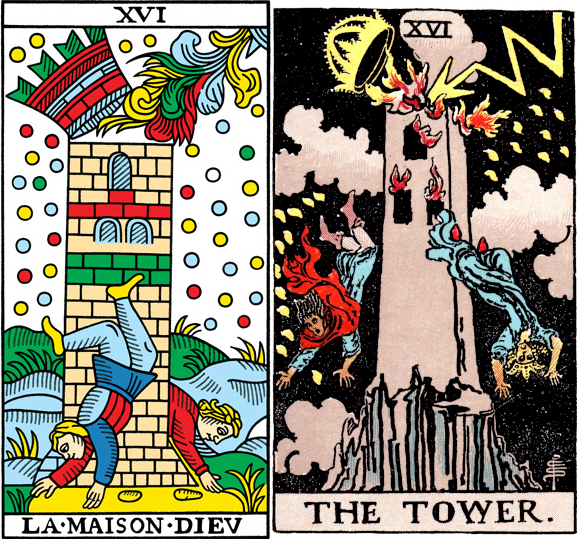
CARD XVI: THE TOWER
When first viewing The Tower card, it’s unavoidable to assume the card is a symbolic echo of the ancient Biblical tale of the Tower of Babel—which appears in the Old Testament’s book of Genesis. But this is a false assumption, because The Tower card is not about the pitfalls of ambition, it is about liberation.
In the successive steps of your spiritual awakening, The Tower carries two lessons.
The first is the realization that everything you’ve built up in your conscious life is an illusion—from the persona you present to people to the value you put in material things. All of the status you’ve attained and the wealth you’ve amassed will not address the wellbeing of your soul. And at times, it takes a catastrophic or tragic event for us to realize this—as depicted in The Tower card. Something needs to rattle our sense of reality.
Sometimes it’s the death of a loved one, or a near fatal accident, or losing your job, or a life threatening illness, or a near death experience. If we are lucky, the realization will come on its own through inner work and reflection. But if it doesn’t, the external world has a way of compelling our growth whether we like it or not. This is something which Carl Jung talked about. In his book, Aion, he writes:
“The psychological rule says that when an inner situation is not made conscious, it happens outside, as fate.”
And this is the first meaning of The Tower card to meditate upon. When you see this bolt of lightning striking the tower, notice it is knocking off the golden crown which was placed on top—the old hierarchies have been undone. And the former rulers at the top of those hierarchies—represented on the card as a king and a queen—are thrown out onto the cliffs below. Notice how the tower is built high into the sky, removed from nature or the ground, those living within the tower have lost touch with reality around them.
The force that causes this dramatic shift is a destructive bolt of lightning, but it is also the bolt of revelation.
Which brings us to the second lesson of The Tower. It is the realization that the material plane itself is an illusion. You are confronted with the knowledge that you have a soul, and that your consciousness is not restricted to only this physical plane. The gnosis of this realization is often brought on by some visionary state—for some it is through meditation for others it is through psychedelics like ayahuasca.
There is further esoteric significance in the Waite-Smith version of The Tower which the creators of the deck thoughtfully concealed. First, notice the little flames around the male figure on the left and above the female figure on the right. On the left side we see 12 flames—these represent the 12 symbols of the Zodiac. On the right side we see 10 flames—these represent the 10 sefirot of the Kabbalistic Tree of Life. Their sum, 10 + 12 equals the total number of Major Arcana cards: 22. It’s important to point out that these little flames resemble the Hebrew character, Yod, which is the first letter in the unspeakable name of God—made of the Hebrew characters: Yod-Hey-Vav-Hey.
And finally, the lightning which causes the cataclysm has a unique arrow-like shape, most likely because it is referencing the connecting paths of the Tree of Life as they are represented in Hermetic Qabalah—which represents our descent into physical reality as a bolt of lightning passing through all of the energy orbs on the Tree of Life.
The divinatory meanings of The Tower card are traditionally seen as: liberation, rupture, revealed secret, destruction, dispute, explosion of sexual energy, illumination, and revelation.
Rachel Pollack writes:
“It usually refers to a period of violent upheaval (either literally or psychologically), the destruction of long established situations, the break-up of relationships in anger or even violence.
The card can mean a flash of enlightenment, particularly if such enlightenment replaces a limited view of life. Only the reader’s intuition and experience, as well as the hints from the other cards can indicate the specific meaning.”
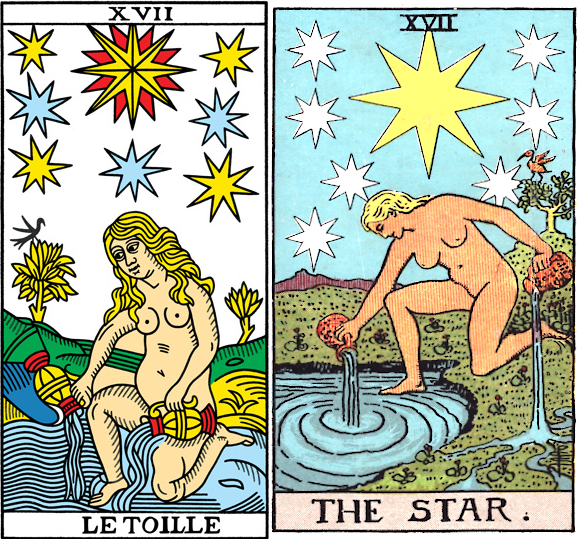
CARD XVII: THE STAR
The Star serves as a moment of calm and regeneration after the upheavals of The Devil and The Tower cards. It’s a card that immediately gives one an impression of harmony, beauty, and a union with nature and her processes.
It’s worth noting that the iconic symbolism of The Star card has not changed in centuries. The Waite-Smith version remains consistent with the way The Star was depicted four hundred years earlier in the Marseilles deck—both show a nude woman, kneeling, and pouring two pitchers of water onto the landscape under her with stars in the sky above.
The Star card tells us that just as there is a time for facing our darker aspects and destroying the illusion of the material world there is also a time to nurture and nourish oneself. To take care of what needs to be taken care of. To make time for oneself. To encourage the harmony needed for new life to grow.
There is a beautiful myth which tells us the potential origins of the symbolism in The Star card. We can trace the roots of this myth all the way back to ancient Egypt. Every year, the lands around the Nile river would experience a drought season. Until a time would come when torrential downpours would fill the Nile up again to the point of overflowing. And the neighboring lands would be fertile enough to grow green again—for in those ancient times, not all of Egypt was a desert.
This yearly cycle of drought season and wet season was said to be caused by Isis. After the death of Osiris, her father, she wept for forty days while searching for all of his scattered remains. The water that filled the Nile each year and nourished the land was said to be the tears of Isis.
Strangely, I have not seen any Tarot books make this connection between The Star card and Isis. Yet the link between them seems so clear as day. Consider also that there is a bird in the tree behind the nude figure, in both the Waite-Smith and the Marseilles deck which resembles the ibis. That iconic bird with a hooked beak whose head is the head of Thoth, the Egyptian god of wisdom.
In the analysis of The Star card by esotericist Paul Foster Case, in his book The Tarot, it’s written that the large and yellow eight pointed star above the crouching woman represents “the cosmic radiant energy which is sent forth from the various suns and fixed stars of the universe.” It can also be seen as the individual’s own consciousness, which is now in the beginning stages of expansion.
Paul Foster Case states that the other 7 stars in the card then represent the seven classical celestial bodies and all of their influences and correspondences. Those being: Saturn, Jupiter, Venus, Mars, Mercury, the Moon, and the Sun. In the ancient tradition of alchemy it’s believed each of these classical planets has a corresponding metal: Saturn-lead, Jupiter-tin, Venus-copper, Mars-iron, Mercury-quicksilver, the Moon-silver, and the Sun-gold.
Through the procedures of alchemy, and working with each metal, the alchemist also aligns themself with the planetary energies and movements. Their will becomes aligned with the movements of the solar system. This connection with alchemy in The Star card once again connects it to ancient Egypt, from where it is theorized alchemy first originated. This is partially confirmed in the etymology of the word alchemy, which seems to be constructed from the term Al-Khemet, meaning ‘of-Egypt’, Khemet being the Egyptian’s name for their land.
With all this in mind, we can see the depth of symbolism in The Star card, and its call toward nourishment and a union with nature’s processes.
In readings, The Star card has these traditional associations: fertility, to feed, to sanctify, inspiration, cosmic energies, to harmonize, to find one’s place, hope, and nourishment.
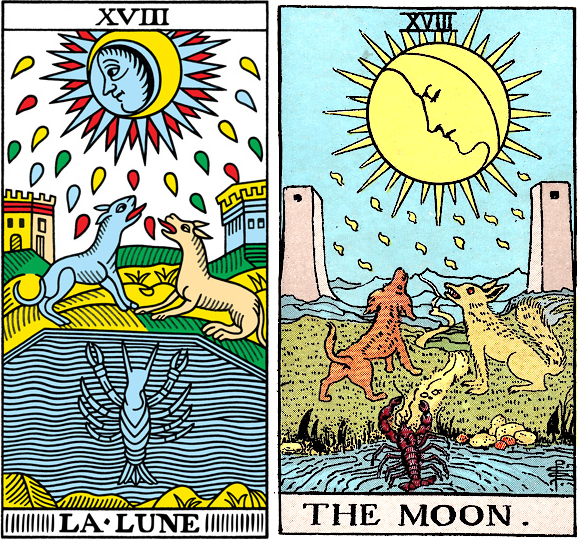
CARD XVIII: THE MOON
The Moon is one of the most enigmatic cards in all of the Tarot. Its strange array of symbols—a pool of water, a lobster, two canines, two towers, a path that leads into the distance, and droplets coming down from the moon—has remained consistent across centuries of variations to the Tarot’s other cards. For example: the Waite-Smith deck retains the Marseilles deck’s design for this card. It features all of the same elements down to the lobster exiting the water and the droplets coming down from the moon.
There is a sense that this array of symbols communicates some truth about the moon’s nature and more importantly its powerful effect on our imagination. It is one of the most universal symbols—the myths of every world culture in some way acknowledge the mysteries of the moon. Why is this?
First there is the dichotomy between sun & moon. Where the sun represents daylight, work, social life, and the conscious mind, the moon represents darkness, dreams, the unknown and the unconscious.
But there’s still more to it—some unsolvable paradox propels the moon through our imagination. There’s the fact that the moon draws up the waters of the earth, pulling the tides. There are the age old accounts of police reporting more crimes during the full moon. Then there’s an etymological tidbit about the roots of words we so commonly use—the term lunacy is derived from lunar. The Latin derivation is the word lunaticus, meaning moon-struck, a kind of moon madness.
There is traditionally an association with the sun as masculine and the moon as feminine, this may be partially due to the strange fact that a woman’s menstrual cycle, on average, lasts the length of a moon cycle. 28 days on average for a woman, sometimes more, and 29.5 days for a lunar cycle.
Then there are occasional times in life when you run into some confirmation of the moon’s mystifying reputation.
When my son was only an infant, I would often take care of him at night—this meant everything: feedings, diaper changes, etc. For anyone with a child, you know that trademark haziness of waking up at 3am with only the light of the moon shining through the window. One night, when my son was only two months old, he had woken me up around such a time. I fed him a bottle and rocked him back to sleep.
I laid him in the bassinet and crossed my fingers that he would continue sleeping, and permit me to also lay back in peaceful slumber. But I noticed he was stirring, ever so slightly. Every 20 to 30 seconds his legs would kick or his body would rock a little. I wasn’t sure why, so I just sat there and watched.
The only light in that darkness was a soft beam of moonlight falling through the windowpane. I stared at it and marveled at how beautiful the full moon was. In that moment I also noticed that the moonlight was on my son’s body—not his face—only his body. I began to consider: is he reacting to the moonlight?
I continued to watch, half expecting that his movements meant he would wake up and I would need to soothe him again. But within twenty minutes, the moon had shifted its position in the night sky and the moonbeam was no longer touching his body. To my utter astonishment, he stopped fidgeting, and fell asleep.
The moon is a symbol of great depth and it carries all of these associations. The Tarot card of The Moon presents us with a paradox of equal measure. In the Waite-Smith version of the card we see a pool of blue water at the bottom from which is emerging a crustacean—a lobster—it is touching a yellow path which leads into the distant background. Directly above the lobster is a dog and a wolf, both looking up at the moon, seemingly howling. Behind these canines in the background are two gray towers, which flank the picture on the far left and right, echoing the pillars of the High Priestess card. Between the towers are little yellow flames, which look exactly like the flames we see above the figures that fall from The Tower on card XVI. And finally, above these we see the brilliant yellow moon itself, with the side profile within of a person in deep thought, sleep, or meditation.
It is generally accepted that the crustacean represents some deep instinctual part of ourselves, perhaps so ancient that it could be said to arise from the collective unconscious—per the terminology of Jung. Waite himself offers a commentary on this card in his book, The Pictorial Key to the Tarot, where he writes this about the crustacean: “that which comes out of the deeps, the nameless and hideous tendency which is lower than the savage beast. It strives to attain manifestation, symbolized by crawling from the abyss of water to the land, but as a rule it sinks back whence it came.” Could Waite inadvertently be referring to archetypes? And the instinctual influences we all carry in the collective unconscious?
The dog and the wolf can be seen as our base animal impulses, the wolf as the raw animal of instinct and the dog as the more civilized animal who has learned a degree of self control—in that regard the dog is humankind. Which has built up impressive philosophies and works of culture but which always carries within itself the potential for those base impulses: greed, rage, lust.
The two towers are a construct of culture and its influence on us. We then notice that the path leads past all of these into the blue mountains and sky. The two towers then mark a threshold for all that man has made, the path before us leads further to what is beyond knowing. The Moon is our intellect in introspection, seeing the full terrain of our mind displayed beneath it.
Waite describes The Moon card as the “the life of the imagination apart from the life of the spirit.” He calls the moon-face “the face of the mind” which directs “a calm gaze upon the unrest below; the dew of thought falls; the message is: Peace, be still.”
With these insights, we can see The Moon card through a new light. It represents our mind’s ability to engage imagination, dreams, and visions. These are altered states of consciousness we achieve through meditation, trance, and sleep. This is what The Moon represents to us in the third row of the Major Arcana. This is an important acknowledgement in the process of spiritual awakening—that your imagination is a divine tool. We see this confirmed in the work of theorists like Henry Corbin who wrote extensively about the imaginal realm of the Sufi mystics—he gave it the name Mundus Imaginalis. Among these traditions it is believed that the imagination belongs to the soul and it is one of the only aspects of the personality which survives death.
Then there is this powerful phrase from William Blake, who wrote: “The Eternal Body of Man is The Imagination, That is God himself, The Divine Body.”
The Moon card invites us toward this engagement with the depths of our being. No spiritual practice is complete without meditation, deep reflection, engagement with the dreamworld, and engagement with our imagination.
In readings, The Moon card carries these traditional associations: receptivity, intuition, femininity, the mother archetype, solitude, madness, imagination, dreams, nighttime, poetry, phases, and reflection.
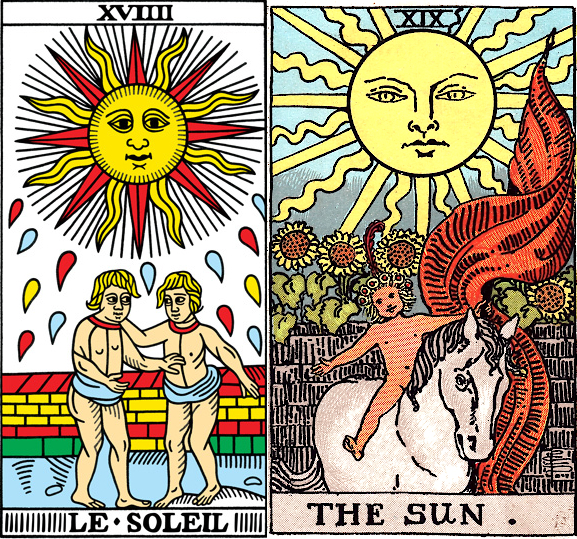
CARD XIX: THE SUN
With Card 19, The Sun, we arrive at the most undoubtedly joyous scene from all of the Tarot: a child with their arms outstretched riding on a white horse towards us, their smiling face gives the impression that this is a celebration. Behind them we see sunflowers and a bright yellow sun-face dominating the sky above, radiating beams in all directions.
The child seems to be united with the sun’s energy, radiating with exuberance with his / her limbs extended outward like the sun’s rays. The child in the card is you at this point in your spiritual journey on the third row of the Major Arcana.
So what does it mean to be one with the sun?
The sun provides life on earth the ultimate cycle which holds sway over all things. There is no living creature which is not affected by the sun’s cycle—a transit across our skies that determines our sense of time and provides life giving light to not only plants but animals too. Have you ever seen a house cat sunbathing? Or have you ever noticed your melancholy mood in the winter months of the year, when the days are shorter and the nights are longer. There are even studies which show that in countries that have longer than average seasons of low sunlight, there are more cases of depression and suicide.
To align oneself with the sun is to align with the most important and life giving cycle we know of—the sun’s transit across the sky. There are even plants, like sunflowers, which are heliotropic, and they will turn their flowers and leaves toward the sun, and follow it on a daily basis.
With all of the above in mind, the sun holds a special place in humanity’s imagination as the king of all cycles—birth and death and even rebirth. We think of the sun in its daily manifestation—which brings us day and night—but also in its annual manifestations, which bring us the summer and winter solstices. The sun is universally a symbol of cycles, resurrection, and even immortality.
So why are you a child in this card?
Because at this point in your spiritual journey you are in essence reborn. You have faced the temptations of devils on the material plane, in The Devil card, you have survived the world’s illusion being destroyed in the cataclysm of The Tower, then in The Star you nurtured the soil of your depths to encourage a new harmony in yourself, and you have even engaged with the unknown through meditation, dreams, and trance induced visions, as represented by The Moon. It is safe to say that you are no longer the person you were in row number one. Who was only learning the social structures of the world and first tasting the pleasures of the senses. You are born anew.
Moving forward with a purity of intention—like that of a child. This calls to mind the figure of The Fool, which started our journey in the Major Arcana. And this association is intentional, in the design of the card, Waite and Smith have included the red feather of The Fool on the child’s floral headdress.
Notice also, how the child needs no saddle or bridle for its white steed, because the individual at this point of the journey has reached a cooperative union with their animal side.
This next point is my own, and I haven’t seen any other Tarot theorists mention it.
Over the course of these three celestial cards, The Star, The Moon, and The Sun there is depicted a gradual expansion of consciousness. Again this comes directly after the trials of The Devil and The Tower. The expansion of consciousness which leads one to the awakening depicted in The Sun is depicted by the radiating orb at the top of each card. In The Star we see an eight pointed orb, a center blossoming in new complexity like a flower. In The Moon, that orb has grown larger with short radiating points on its perimeter and the profile of someone with their eyes closed—deep in thought, meditation, or sleep. Finally, in The Sun, we see a bright full orb, with straight and wavy beams of light radiating in all directions, featuring a face with eyes open that looks straight ahead.
The sun with a human face is the illuminated individual. And the emotion that radiates out of this card is love. Just as the sun is a life giving force on earth, likewise love is a life giving force. Every decision we make can be made out of fear or out of love—and the ripples of those decisions can extend far beyond our perceived circle of influence.
And finally, The Sun is an awakening of the spirit in matter. Rather than a rejection of matter it is an enthusiastic embrace. It is the understanding which arises from the mystic hermit who after years of asceticism embraces reality with a spiritual joy, but also understands that this embrace must now be shared and taught—for the benefit of the external world. This is why the child rides a horse out of the walled garden, with a banner of proclamation, with the intention to unite again with the external world. Once we have attained an expansion of consciousness and a spiritual awakening, it then becomes our responsibility to elevate and awaken others—for the good of humanity and all living things.
This is the profound meaning of The Sun card.
Regarding its meaning in traditional divination, The Sun card usually refers to: love, new life, passage, masculinity, the father archetype, success, cycles, and rebirth.
CARD XX: JUDGEMENT
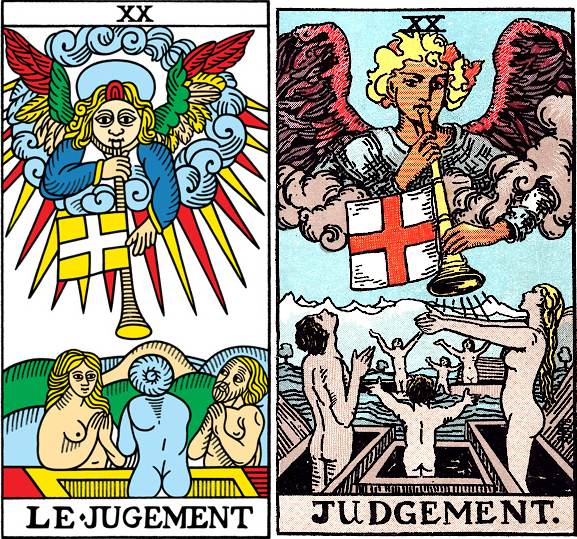
Judgement is a deceptive card, as at first glance it gives the surface level associations of the fabled Last Judgement, through which Christ returns and all sinners arise from their graves and are judged according to the severity of their sins. But this concept is not strictly Christian, it also exists in Judaism and Islam as the ‘Day of Judgement’.
But there is also an esoteric meaning to the Judgement card which escapes the viewer’s first examination. Its meaning becomes clearer if we consider its position on the third row, occurring directly after The Sun and before The World.
The Judgement card concerns purpose—to find one’s destiny, which aligns with the interests of the higher self, represented by the angel. At this point in your journey, the Tarot tells us to awaken to the call of higher ideals and the energies of your destiny.
Why is this shown through the visual symbolism of ‘waking the dead’? Because the tombs are the body in which these powers and motivations reside. Once you have a purpose, every cell of your body can move in unison to serve a new direction. No one can tell you what that purpose is, it is something revealed to you and you alone.
There is a phrase often spoken in the tradition of ceremonial magick called Thelema which states: “Every man and every woman is a star.” This means that everyone contains an inherent potential for greatness. And everyone is on an individual journey of self discovery. The philosophy is to find one’s true purpose and act in accordance with it.
Alejandro Jodorowsky states this in The Way of Tarot:
“After a sojourn in the depths of the subconscious, after a task that may have been performed in pain or in any case in the shadows, a new life is awakening, as if for a birth or a resurrection. We think of the Last Judgement when the dead come out of their tombs. Everything that is hidden or in gestation comes to the surface on aspiration for a new world. This powerful desire to evolve resonates like divine music. What this Arcanum suggests is that a force defying death is at work in our very lives: immaterial and immortal Consciousness.
It manifests in the form of an imperious call to live in a new dimension. The angel is looking straight ahead, and, with his trumpet at his mouth, he symbolizes the announcement of this awakening.”
Jodorowsky continues with a passage where he speaks from the perspective of the Judgement card. Stating:
“You have flowed with the black river of Arcanum XIII. You have thrust your roots into The
Devil’s darkness. You have been the demon sadly lifting his torch as if nostalgic for the light.
While you were wandering at the bottom of the abyss, I did not forget you. Now I can enter into contact with you, but only little by little, with infinite gentleness and patience, because I am too strong.
You can unite with me only if you have been prepared, if you have made the journey to the depths of your being, if you have known all the facets of your masculinity and your femininity and reconciled them in balance. I bring you light from the entire universe. My power requires you to have made peace with yourself, so that the new Tree has begun growing from the deepest regions of your subconscious.
May your entire being be plunged in infinite prayer and all your cells know peace. May you be like these naked figures who have placed all their trust in and accepted what is higher. Without the deity, I could not exist. When the individual becomes a veritable trusting, tranquil child, then and only then do I appear as complete certainty—as the call that has been echoing since the dawn of time.”
In readings the Judgement card has these associations: a call to action, realization, announcement, irresistible desire, triumph, healing, father / mother / child relationship, the emergence of something buried, grace, and awakening of consciousness.
CARD XXI: THE WORLD
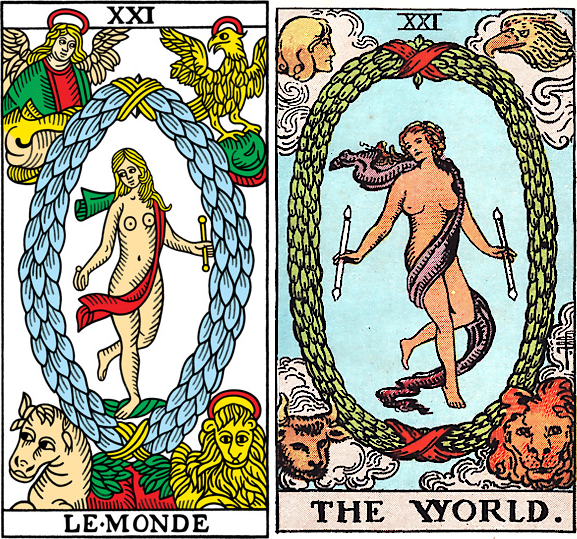
At first glance, The World card looks straightforward in its artwork: it shows a woman walking or dancing within a green wreath that spans the length of the card, she holds a white wand in each hand and there are three animals and one human dispersed in the four corners of the card. But as you spend time reflecting on it and researching it, you get the sense that there is much more going on than meets the eye. The true message of The World card is concealed in surprisingly ancient symbolism.
The following insights, except where stated, are entirely my own. And I haven’t read this particular breakdown of the symbolism of The World in any of the Tarot books I’ve studied. So I’m proud to include it in this work. These are insights I’ve arrived at in my personal reflection and research into The World card.
Side note: for this examination I have included relevant imagery of the symbolism which is mentioned. You can view it at the transcript page for this episode, just scroll down to the respective passage. It will be helpful to really see some of these examples. Just follow the link included in the episode description.
First, let’s draw our attention to the dominant shape on the card: this vertical oval formed by the laurel wreath. It calls to mind several associations: the shape is the number zero, which links us back to the purity of The Fool, a symbol for our soul. The green leaves of the wreath resemble scales in their tightly organized formation, which calls to mind another ancient symbol: the snake biting its own tail / ouroboros. It is a symbol long associated with creation, destruction, and rebirth, and it appears in an infinite variety of forms in almost every world culture.
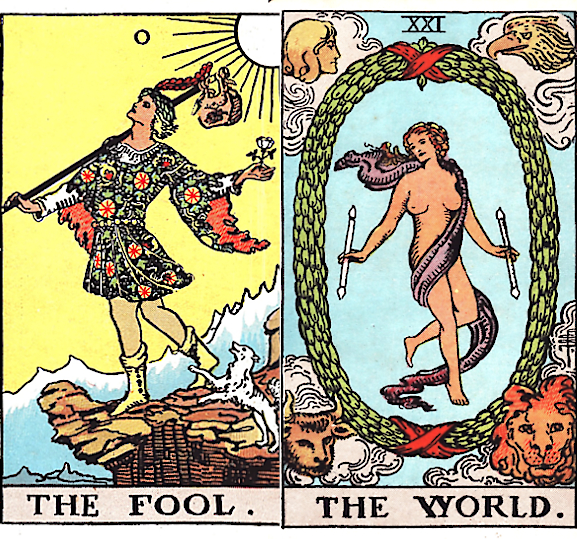
First, let’s draw our attention to the dominant shape on the card: this vertical oval formed by the laurel wreath. It calls to mind several associations: the shape is the number zero, which links us back to the purity of The Fool, a symbol for our soul. The green leaves of the wreath resemble scales in their tightly organized formation, which calls to mind another ancient symbol: the snake biting its own tail / ouroboros. It is a symbol long associated with creation, destruction, and rebirth, and it appears in an infinite variety of forms in almost every world culture.
The laurel wreath is itself an ancient symbol placed on the heads of people who deserve honor and distinction—it represents triumph, and completing an accomplishment worthy of celebration. We still see it today on everything from ancient architecture to award show logos on feature film posters. Notice The World’s wreath is also bound with red ribbons, which resemble symbols of infinity. We have seen such symbols over the head of The Magician and the woman in the Strength card earlier.
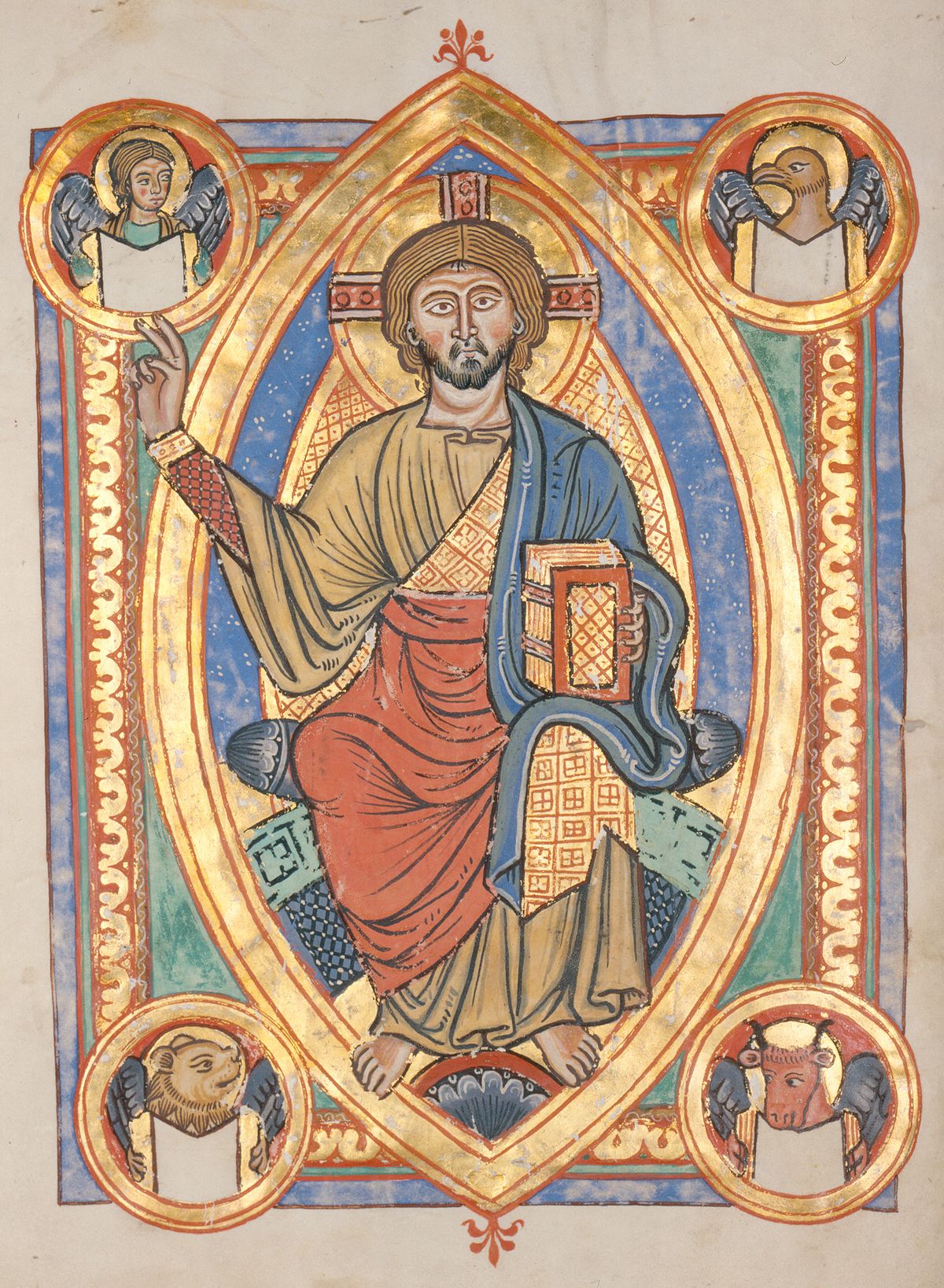
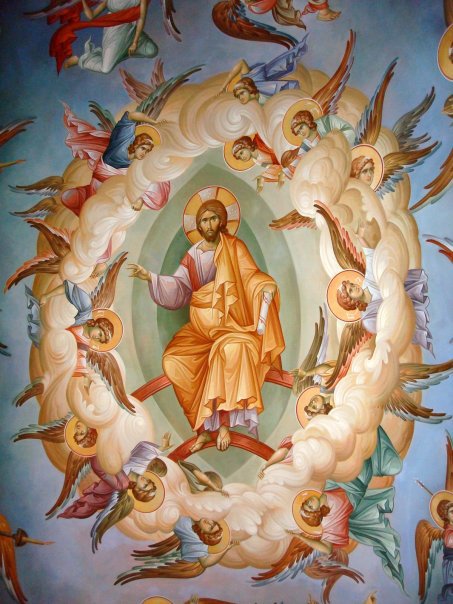
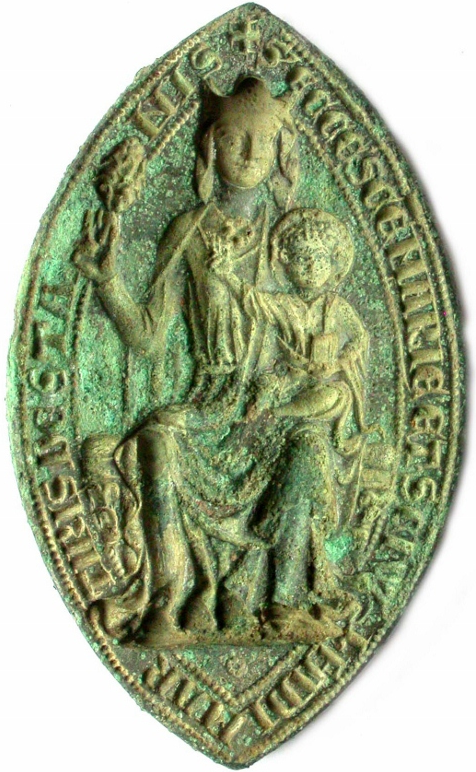

The shape of this wreath is significant as well, it is a mandorla. This is an almond shaped enclosure which is associated with the transcendence of time and space. You see it in early Christian iconography and reliefs in Gothic cathedrals, often placing Jesus Christ or the Virgin Mary within the mandorla. But the symbol itself likely has ancient antecedents.
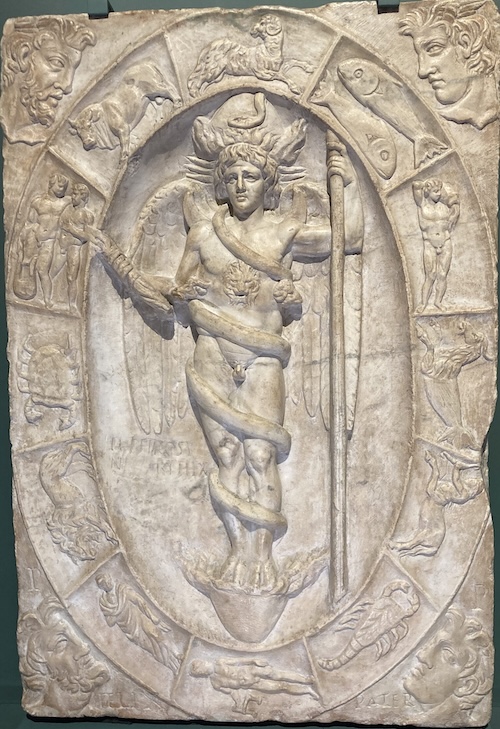
There is a stunning sculpture found in ancient Rome, from the 2nd century A.D., depicting a dual god: Mithraic Aion and Orphic Phanes. This is part of a syncretic practice common in Hellenic times to combine two gods of disparate traditions. Aion-Phanes is an androgynous winged god, though in the sculpture in question they are depicted in nude male form. In esoteric traditions the figure of The World card is said to be androgynous, with the floating sash covering her sex. The sash itself is reminiscent of the serpent which spirals up the naked body of Aion-Phanes in the sculpture.
Aion-Phanes is also shown at the center of a mandorla surrounded by the symbols of the Zodiac. One common interpretation of the four creatures we see in the corners of The World card is that they represent the Zodiac. Starting from the bottom right they are a lion, an ox, a man, and an eagle. According to Tarot theorist Rachel Pollack they represent the four ‘fixed’ signs of Babylonian astrology: Leo, Taurus, Aquarius, and Scorpio.
Christians later identified these four creatures with the four evangelists and appropriated them into their cathedral designs and paintings. In this regard, the four creatures are a simplification of the ancient depiction of placing a deity within a Zodiacal ring.
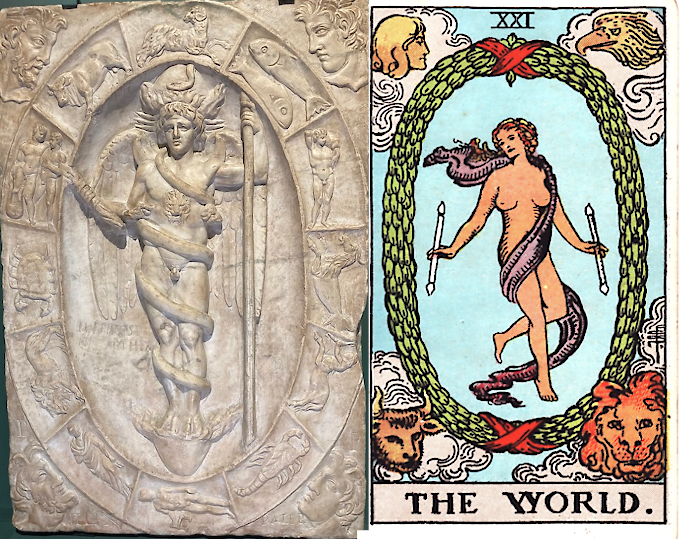
As you can see, this rabbit hole goes deep. But we haven’t even arrived at the most important part yet: why the nude figure in The World is holding two wands. In my research, I read the explanation of this card in several books, but felt they were all missing some key lesson which The World card is trying to teach us. I even tracked down Arthur Edward Waite’s explanations of this card he helped design, as he states in the book The Pictorial Key to the Tarot. But ultimately, Waite remains evasive on the true meaning. Perhaps he was saving that for one of the initiatic magick orders he was a member of.
But with all we know, I think there are enough threads concealed in the card’s symbolism for us to make a good attempt at its hidden meaning—one which coincides with the aim of spiritual awakening which is the focus of the Major Arcana’s third row.
The figure in The World card holds two wands, which call to mind the two pillars of The High Priestess card, named Jachin and Boaz. Both the pillars and these two wands, positioned opposite one another on the same eye level are a symbol of the constellation: Gemini.
Why does this constellation play any important role in the final card of the Major Arcana, representing our spiritual awakening?
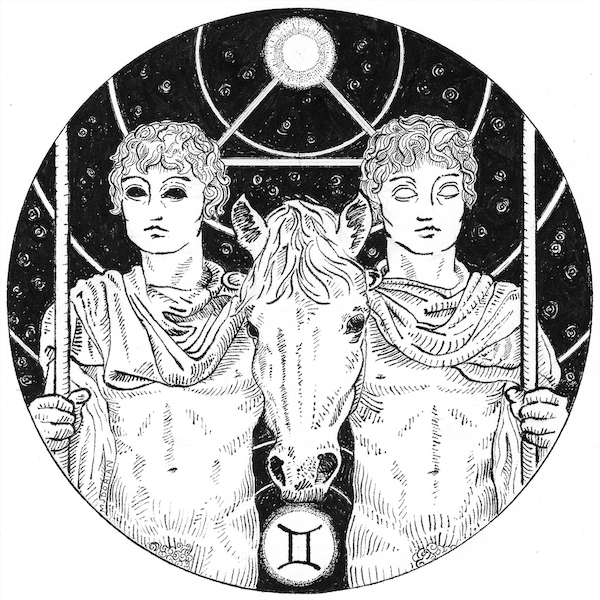
The myth associated with Gemini tells the story of two brothers born from the sexual union of Leda and Zeus. One of the brothers was mortal, Castor, and the other brother was immortal, Pollux. When you view the constellation of Gemini, you can draw two stick figures holding hands, formed from the neighboring stars. The individual stars of Castor and Pollux are the respective heads of these figures.
These two brothers take on great esoteric significance as a myth that teaches us about the relationship between the soul and personality of the individual—and the evolution of this relationship as the soul gains increased influence over the personality.
Gemini is also ruled by the planet Mercury, who is synonymous with Hermes to the Greeks and Thoth to the Egyptians. In Hellenic times, the Greeks saw Hermes as equivalent to Thoth, and even renamed areas in Egypt dedicated to Thoth, like the city Khemenu, to the name Hermopolis, which referenced Hermes. As we covered in the main Tarot series, the Tarot itself is often referred to as the Book of Thoth, due to its mythical roots in ancient Egypt. Following the syncretic customs of Hellenic times we could likewise call the Tarot the Book of Hermes / Mercury.
And all of this adds up to the true meaning concealed in The World card. That we are each born as Gemini twins—with a mortal part and an immortal part within us. Our Great Work, as embodied in the three rows of the Major Arcana, is to develop a conscious relationship between our mortal personality and our immortal soul. Because at first, our life is very much dictated by the wants and animal impulses of our mortal personality, as shown in the first row. And for some people, that is all their life will be—just the mortal part.
But as we grow, as our self awareness increases, as we face life’s challenges, as we meditate, reflect, dream, and truly engage with our imagination…we awaken to the existence of our soul. That immortal part which carries our true self—and is also the terrain of our highest ideals. And as that occurs, it is our responsibility to form a meaningful relationship with our soul, so that a balance between the mortal and immortal part is achieved. As is shown in the balance between the right and left wand which the figure in The World holds. In the esoteric interpretation, even the dancing feet of the figure hint at this final lesson: one foot is grounded in the physical and one is lifted in the air of spirit.
It’s possible that what the Tarot describes as its final card is not really a reachable goal in the sense that things have a conclusion in the material plane. It is a never ending work-in-progress. This goal of The World, which coincides with the concept of individuation in Dr. Carl Jung’s theories, it is a constant project in the life of the individual.
If we take the occult and mystic traditions at their word—that all of us carry the influences of stars, planets, spirits, demons, archetypes, and energies—then we are all a center of the universe. And the goal of life, as shown in the Tarot, is to reach a point where you live in a harmonious balance with all of these forces.
A worthwhile project.
And it’s been my honor to come along the journey with you. I thank you for listening.
And I wish you The World.
PATREON

Become a patron of the show, and gain access to all the exclusive Creativity Tip episodes, as well as episode exclusives. Just click the button or head over to: https://www.patreon.com/mjdorian
Wanna buy me a coffee?
This show runs on Arabica beans. You can buy me my next cup or drop me a tip on the Creative Codex Venmo Page: https://venmo.com/code?user_id=3235189073379328069&created=1629912019.203193&printed=1

VENMO